White Streak

“Anne died.”

In October of 2010, I was singing in Palm Beach. I decided to take a brief trip to Pittsburgh to surprise my first favorite little guy on his birthday. Just as I boarded the plane, my phone rang with those two words you just read.

I’ve never talked about it much and I’ve never written about it on my blog. I still don’t know what to say or think or feel and it’s 4 1/2 years later. I think about Anne all the time. I stopped writing on her FB wall because I felt like people would think I was crazy, though they are the only people I’ve talked to about her.

I am plagued at least once a week with some gnagging “what if I’d only” type thought. For example, the last time I saw her, at the baptism of one of her nieces maybe?, we were in our church together. When we hugged each other that time, it was one of the few times in our decades-long friendship that she didn’t let go first. What that meant to be a sign?

If it was, I didn’t get it. Instead, months later, I got the call. I went to a funeral. Now, I can’t hug her or sing with her or laugh or cry or imagine what we’ll wear to her daughter’s wedding. She can’t tell me not to be such a goody-two-shoe-wearing nerd and I can’t tell her to take off all the black makeup and clothing and just apply herself (she was so smart).

I am overwhelmed, still, with such awareness of what the world lost that I cannot be really angry. This horrible pattern of “daughter loses her mother too young” was continued by Anne with her own daughter by choice…I can’t feel anything about that except such overwhelming sadness. If she’d pulled it together, everyone would have celebrated it because we all loved her so much. In return for our love, we are all left with that horrible loss of her smile, laughter, and voice.

Sorry, it’s an uncharacteristically sad ending for one of my posts. Here’s one of our favorite songs and this should bring a bit of joy: https://www.youtube.com/watch?v=lN4BqEvb18M

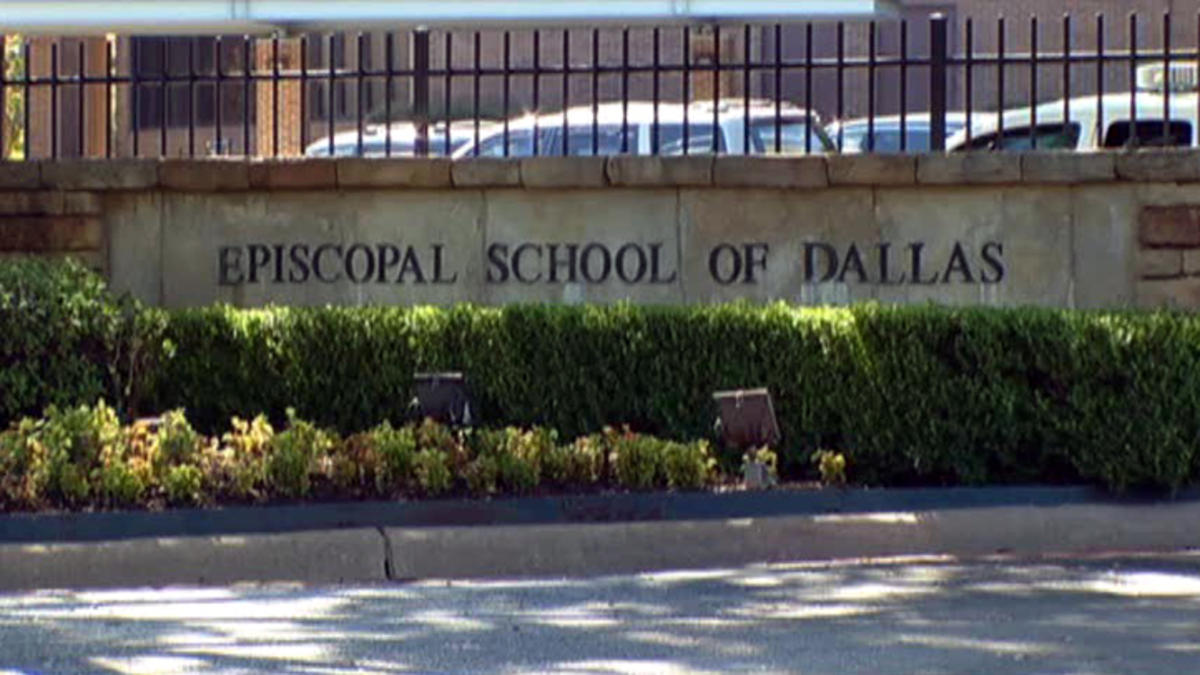
The Episcopal School of Dallas – a tribute from the Ayres siblings

How the Episcopal School of Dallas helped make us who we are

Written by: Jennifer (Class of ’91), Laura (Class of ’94), & Chris (Class of ’97) Ayres

We are writing this together as a tribute not only to the comprehensive, well-rounded education we received, but also as a way of saying “thank you” to our parents, who made that possible.

ESD_LOGO

LAA: What is something you learned during your time at ESD that seemed like “no big deal,” but sticks with you today? Brother, you start.

CSA: ESD taught me, from the start, I was going to have to work hard – harder than anyone else – if I wanted to keep up. There were lots of demands placed on us academically and if you wanted to do well, you had to put in the time.  Once I started doing that, I saw a direct correlation between the time/energy you invest and results you get.  If you’re lazy, then you’ll suffer the consequence.  If you work hard, you’ll generally see the reward.  When you struggle, if you not only persist but also crank up your focus and effort, you’ll get there.  Eventually, this led to a very steady, strong work ethic that translated to virtually every aspect of my life, and something I fall back on today.  Learning at ESD a desire to achieve the most you can with what you have and to compete hard, everyday, has served me well.

LAA: Good points. I echo the feeling of struggling at the beginning, and it was also one of my takeaways. The teachers (including the coaches) simply would not allow me to fail and something about their confidence in me made me want to work harder, to be more competitive, and present in all aspects of my learning. If I was sitting in the Commons goofing off during Study Hall, Rebecca Royall’s sliding door would open, she would barely look at me sideways, and I’d get back to work. Jen, what do you think?

JLA: The tenets of the school (ethical decision making, community, service to others, daily worship) stick with me today. You two have referenced it and it’s true – we live in a society that fosters competition and social comparisons and these tenets anchor us to what is truly important when we become distracted. What is interesting to me today is that the tenets do not reference academic learning or athletic skills or artistic talent, the things that were so important to us when we attended the school. It references living a life based on honor and giving to others.

LAA: I’m gonna interrupt because you’ve just hit on another thing that was unique about ESD – mandatory community service. Sorry to interrupt, but interrupting does run in the family. It was exceptional, right?

JLA: Yes, I’d forgotten about the community service requirements, but every student cleaned the school and there were multiple students cleaning the school everyday.

CSA: I think the true genius of ESD’s community service is impressing on kids, at a very early age, the important concept of service to others in a very “me”-driven society. That means serving others inside the school’s walls, as well as utilizing your gifts to serve the larger community outside of the school.

LAA: I certainly think most of us owe our cleaning skills (and obsession with quality carpentry) to Sandy “Mr. D” Donaldson.

JLA: True. Now that I think about it, I have typically been one of the people in my work environments who cleans up messes that others left behind. Even if I did not make the mess, I have a responsibility in ensuring that our shared space is clean and ready. How many times did we hear Mr. Donaldson say a variant of that sentence? Every student went off-site during senior year to dedicate time to a community agency that needed help. Volunteerism was modeled for us by Mom and Dad, but ESD taught us that it was not simply a family value. Every student went on the class retreats. Every student went to chapel everyday and Eucharist on Wednesday. Again, Mom and Dad taught us early the importance of weekly attendance at worship, but, again, ESD took that to another level by generalizing what we were learning at home.

CSA: Speaking of chapel, I loved sitting as an advisory in chapel and at lunch.

LAA: What else? Anything particularly special you remember?

CSA: Sure, but it’s really the simple, daily things. I loved bus-rides with my teammates. How the varsity always watched the junior varsity play.  Learning lessons and traditions from older role models and passing those things down to those in classes below me.  Admiring two people’s ability to learn the names of everyone in middle school or upper school so we could have a grub day.  I know everyone falls back on the main traditions – Pass it On, Senior Ring, Senior Shirt Exchange, Lesson and Carols, etc.  Those were and are all great.  But, for me, it was the cool things we did, day in and day out, that I remember most.

LAA: Jen, did you have any favorite traditions?

JLA: I liked the movie day (I think it was the Kevin Michael Hughey day, but the title might have been something else). I remember seeing Cry Freedom and Milagro Beanfield War. There was another one that I likely will remember later. I transferred to ESD from the public schools my sophomore year and I remember being so impressed with that tradition. The idea that the school would rent a movie theater and then return to the school to discuss the movie in small groups is so impressive to me today. I replicated this tradition in my current work environment for our all clinic retreat. One year we watched Shawshank Redemption and another year we watched a documentary entitled I Am. After the movie, the large group dispersed into small groups and answered questions I wrote to encourage personal reflection and application of the movie themes to our daily life.

LAA: I think I slept through one of the movies, unfortunately. I have only a vague recollection of Keanu Reeves in Much Ado about Nothing. Such a let-down after having read it with Dr. Hamlin. Anyway, what about a memory that was, perhaps, not easily formed, but was formative? Yiff, you go first.

JLA: I was a senior when Reed Flashnick (Class of ’92) killed himself. The school was so small at that point — 45 people in my class, perhaps 50 or so in his junior class — that, even though he was not a personal friend of mine, the effects of his suicide on people I cared about were overwhelming. I remember Tommy Whitlock’s trying to teach us math during first period with tears in his eyes and how dazed we all felt at that point. I remember Father Swann’s having the high school classes meet in the chapel after the Wednesday chapel service and telling us that it had been a suicide and that Reed left a note to his “ESD family.” I remember hearing that note read aloud. I remember the school’s saying that we could go home at anytime and signing myself out late morning. The sign-out list was so long and everyone had written “sick” for the reason. And we were all sick that day. I think for most of us it was the first time that we realized how discrepant what we see is from the lives people are actually living and not sharing. I came home that afternoon and my early acceptance letter from Emory was waiting in the mailbox.

LAA: It all comes together because now you help so many people in your profession, Jenny. Chris, what about you?

CSA: I was a freshman in Scott Kimball’s history class.  I also played baseball for him.  He came to me and asked me if I could help a girl in our class who was struggling.  I told him that I was swamped – too many commitments to classes, athletics, etc. – I just didn’t have the time.  I’ll never forget the look he gave me and can almost quote him verbatim: “I’m not asking you to help.  I’m telling you that you have an obligation.  When you are given gifts and you see others struggling, it is your responsibility to help.  You don’t get the choice to sit on the sideline or turn and walk away from people who need help. I don’t care that you’re busy.  And I don’t care than you don’t have the time.  Make the time and get it done.  Understood?” Enough said about a life-changing moment.

LAA: Mr. Kimball likes me more than he likes you.

CSA: That’s probably because you and Mr. Kimball share a common love of music. You sing with your voice and he can play songs with his teeth.

LAA: My moment is actually about your classmate, Chris. I think everyone that met Zach Bell (Class of ’97) adored him (and Betty Jo and David Bell). Zach was really sick during 1992-1993 and complications due to CF kept him out of school quite a bit. Betty Jo told me he was a bit nervous to return and I couldn’t have that. So, I got Mark Lanyon (Sr. Class President, ‘93), Brian Wharton (Student Body President, ‘93), and Krissy McAtee (Class of ’93) to go to his house with me and we told him we’d be really excited if he returned. It was a great afternoon and one I will never forget. Because we took the time to tell him and show him, Zach knew he important to the fabric of our school. For me? That was the heart of ESD in that moment. I thought of it as I sang “On Eagle’s Wings” at his funeral.

Actually, since graduation, I have sung at the weddings of ESD classmates and I have sung at the funerals of ESD classmates. During the ESD years, it’s difficult to truly grasp how lucky you all are to be a tight-knit community. That’s another unique thing about ESD’s view on “community.”

CSA: Agreed. Even now, it’s fun to hear people talk about their ESD experiences. There is this unique sense of commonality that comes from going to ESD, whether you graduated in the 1980’s or 2000’s.   You can see people two decades later and there is no strangeness or awkwardness – you just pick up where you left off.

LAA: I’m interested to know if anything you all learned at ESD is going into the parenting of my precious, angelic nephews, known collectively as the “Ayres Little Men”?

JLA: When I think about what life lessons I want Angel and Giovanni to learn, it comes down to the ESD tenets I spoke about at the beginning. I want them to be honest and compassionate in their decision making. I want them to give back to others and their community so that they recognize that the world is larger than their daily experiences. I want them to recognize that religion and worshiping in community are important because it provides an anchor when they feel adrift.

LAA: Chris, what about Wyatt Walter and Cooper, who are already little Eagles?

CSA: Obviously, Kelley (Loper, now Ayres, Class of ‘97) and I are blessed to have the opportunity to send our kids where we went. I’ve said to many people, there are three things that shaped me as a person: my family, my church and ESD.  I am who I am because of ESD and I’m forever grateful for the way it shaped my mind, body, and my spirit.  I hope and pray that my two boys walk away from their experience feeling the same way.  Much of that was because of this amazing experience given to me by my teachers, the staff, and my schoolmates.

LAA: I would like all four boys to have a very strong sense of independent thought and expression. All of our remarkable classroom teachers, coaches, and administrators at ESD encouraged, no, demanded that we think for ourselves. I think you’ve both said it well. Something all three of us learned at ESD was “figure it out” thinking and “stick it out” perseverance.

CSA: When I hear people gripe about the school and whine about some aspect of their time there, I laugh because there is no way this school didn’t play some part in our successes after we left.  It’s impossible.  I am honored to still have a great set of relationships with some key teachers during my time.  I love my role and time on the Alumni Executive Committee.  I believed now what I experienced then: ESD is the greatest preparatory school in Dallas, in Texas, and in the United States.  I wouldn’t trade my time there for all the money in the world.

JLA: I was talking to a high school junior a few months ago in his therapy session. He is failing his classes and was talking about how insignificant high school is. I pointed to my diplomas and said that I would not have acquired one of them if I hadn’t worked hard in high school and had good teachers. ESD set the foundation for college and graduate school.

LAA: And, in my case, more college and more graduate school, and then even more. Glad we did this because ESD can always use a pat on the back and Mom and Dad deserve that, too. Nothing would have been possible without them. Thanks, Mom and Dad!

CSA: No doubt. Their gift of an ESD education transformed our lives.

————————————————————————————————————————————————–

Dr. Jennifer Ayres, of Austin, Texas

Laura Anne Ayres, of Zürich, Switzerland

Christopher Scott Ayres, of Dallas, Texas
Episcopal-School-of-Dallas-

Big, bad foreigners – who’s afraid of them (and why the hell are we)?

It’s human nature to be skeptical about things that are foreign to us.

Western ears traditionally approach the pentatonic scale as something “foreign,” but it’s not foreign to Eastern ears. A short skirt on a woman is highly offensive to someone in one country, but it’s a staple of one’s closet to another. A spicy curry makes my Indian friends reminisce about their family tables, but my Texas hot sauce made one of my Indian friends grab milk out of my fridge. It’s all relative and, sure, it’s all based on things being “foreign” to us, which is human nature.

What begins as human nature becomes something else entirely when we take it a step further.

The action of legislating, calling names, creating hate groups, or even inciting violence…why do we do it? Why do we take it that far? I think it’s because we are constrained by our own myopic sense of what our world is and we are intimidated by that which we do not know or understand. Our world is not white or black. It is not Jewish, Christian or Muslim. It is not East or West. It is not even native or foreigner. Not anymore. It’s global.

Pick any country…I mean, let’s look at the U.S. or Switzerland because both are currently struggling to manage the “foreigners” issue. What’s the real fear? These are spacious countries with majestic lands. Is the fear running out of resources or is the fear running out of “real Americans” or “real Swiss”? Are we really afraid foreigners will take over the United States or Switzerland with their…uh…what exactly? With their…diverse culture, rich history? Yuck. Who wants that? (Me.)

“Foreigners are taking our jobs,” it’s a common complaint. But, is it true? Many foreigners do jobs, in both countries, that “natives” do not want to or are not qualified to do. God willing, that will always be the case. What a shame if the world’s next Rachmaninoff didn’t want to go to the United States because he didn’t feel he was capable of securing a Visa. What a tragedy if the world’s next Einstein decided to stay away from Switzerland because he was concerned about the Quotas.

“Foreigners are bringing religions into this country that are against our country’s true religion.” Really? In general, I am not a huge fan of Leviticus (I actually find it borderline absurd for the most part), but I’ll go ahead and take a stab at interpreting this one…”You shall treat the stranger who sojourns with you as the native among you, and you shall love him as yourself, for you were strangers in the land of Egypt: I am the LORD your God.” Sorry Jews and Christians, that’s us because it’s in the Torah and the Old Testament. So, if you’re on your high horse about getting the foreigners out, I’m afraid you’ll have to dismount.

Think of it this way, as I’ve learned all too well – we are all foreign to someone. Imagine that some foreigners are not out to get you or your job or your house or your anything. Imagine that some foreigners are in your immediate vicinity to work hard, contribute to society, and be at peace. And, if they really love you, share a good recipe for yellow Thai curry (still hoping).

Seriously, though….maybe, you could help them integrate.

Instead of kicking them in the back.

Breaking Point

I love snow.

I have this outdoor plant from Luzern (everything from Luzern is superior, including cheese, Emmi products, and Catholics).

I love snow. But, it’s snowing. A lot.

The leaves look weak and the plant looks weighed down by the snow. Twice a day, I go outside and get rid of the snow, trying to give the plant some support.

It needs some support. It’s too much snow.

Snow is lovely, but it’s heavy. When flakes come together, they have weight and power. One snowflake? No problem. But pile snowflake on top of snowflake, and you get something. Something heavy. Something that can snap a 100-year old tree in half. One melting snowflake can start an avalanche.

When does a plant or a tree (or a person) reach a breaking point? When does the avalanche happen? When is one tiny snowflake or nasty email or person’s rejection…too much?

I saw avalanches when I walked down the Col du Grand Saint Bernard. There is no warning. Something snaps and that is it. “Breaking Point,” in this case, seems like a post-mortem diagnosis.

The snow is falling in Uitikon. Snowflakes are building. Only one thing to do…photo

When it feels like too much; it is. Get rid of it. Whatever “it” is. Stay away from your breaking point.

Nutjobs, nutjobs everywhere

Everyone had an gut reaction to the news about Charlie Hebdo. I thought it was a mistake. It was the same feeling I had when I heard of the plane flying into the World Trade Center. It’s the same feeling I have when I watch Terms of Endearment and Emma dies. “That didn’t really happen, someone made a mistake. Rewind it and listen again.”

Because I live in a parallel universe – things like that don’t actually happen.

These things are horrific (yes, even Emma’s death). Two of them involve evil. My faith in humanity and the goodness of every person makes evil a terrifying topic that I still, to this day, cannot believe is real. My faith is strong and, I promise you, tolerant.

And, I am sick and tired of listening to people tear religion apart. Immediately after the attack on the offices of Charlie Hebdo,  FB posts purported the trite and cliche statement, “I dislike religion.” So, on Saturday, I posted “I think people who say they dislike religion are silly.” It wasn’t the adjective I wanted to use. I wanted to say “ignorant.” Just as you are entitled to tell me you have a blanket dislike of religion, I am entitled to say your words are ignorant. As I asked someone, “how much do you know about Zoroastrianism, for example?” Attended two Bahai ceremonies and just didn’t like the buffet selections? That makes sense.

The same night of this FB exchange, I had dinner with a friend and her husband, who is Pakistani and comes from a Muslim household. Though he is now an atheist, he said, “who am I to say religion is bad or stupid? If someone has cancer and his faith helps him to get out of bed and keep going every day, well, that’s a good thing.” I thought that was one of the most profound things I’ve heard in a discussion about faith. A Catholic Buddhist and a former Muslim now atheist – totally different faith structures, parallel thinking.

And there is parallel thinking with all the terrorists groups. It’s not religion that unites them, it’s a desire, almost a thirst, to commit acts of terrorism. Sure, there are excuses about the men and women who join these terrorist organizations having felt like lepers in their pre-terrorist lives – cast out of society. They felt they didn’t belong and then someone came along and said, “you can have a family with us.” Oh, poor little terrorists didn’t get picked to play Four Square in 4th grade, so let’s kidnap, rape, murder, and humiliate others. How sad. This is age-old, mafioso stuff, but, again, it’s not religion that unites them. It’s a desire to destroy and to kill to attain power – that’s not “religious.” That’s a sickness in the soul.

What is the answer to combat the terrorist groups? Like many, the temptation to limit free speech seems plausible to me, until we remember that free speech really oughten have limitations because then it’s not exactly “free,” is it? Bit like a free ticket to the movies that you can only use to see bile-inducing Twilight movies. Also using violence to combat violence didn’t seem to work out well in most cases (“An eye for an eye will make the world go blind” Gandhi’s pointed that out a bit more eloquently). The truly important thing to remember about eradicating terrorism is…that we cannot.

There will always be nutjobs. Some of them are violent with weapons and some of them are violent with words. These people will always find each other (just look at Congress). I’ve found, there is one solution to this problem that will work. It will work if your life is in danger, it will work if someone you love is killed. It will work when your country is attacked, it will work when your country is attacking.

It goes like this:

Yes, when this flesh and heart shall fail,
And mortal life shall cease;
I shall profess, within the veil,
A life of joy and peace.

It is the hidden verse of Amazing Grace. It says that we have done our best, we were committed to sucking the marrow out of life, and we used our lives to spread principles like tolerance, kindness, and acceptance. We take our lives not for granted, but for the gift that they were at birth and can be until we die. And there are those unique cases, like those who worked in the office at Charlie Hebdo in Paris, whose lives are gifts even after they die.

Amazing Grace – how sweet the sound.

Back Injury in Switzerland – Part Three: Ayurvedic treatment –Dr. Yogeet Kapoor– English-speaking

(This is part of a 3-post series regarding a back and neck injury I had in Switzerland from 2014-2015. I have been asked by many people how I got “better” so quickly and miraculously. I hope my information is helpful.)

At the beginning of the process, I heard about an amazing Indian healer in the French-speaking part of Switzerland. I was cautious because I knew little to nothing of such things.

Dr. Yogeet Kapoor changed everything about this process for me.

He is a qualified doctor of Ayurveda and Naturopathy, and also a pharmacist. Yogeet sparingly recommends certain herbal supplements, one of which has been particularly helpful to me. He is the founder of L’essencce Holistic Center (www.lessencce.com), which I would happily scrub the floors of because that is how much goodness there is around true Ayuverda.

It is hard for me to describe what Yogeet does, but I can say this. Whatever Yogeet does, I walk out of his studio feeling stronger in body, spirit, and mind. There is no chanting. There are no cinnamon or lavender-flavored candles. There is also no painful pushing and pulling of the muscles or manipulation of the body that feels uncomfortable. None of that. Just healing.

I began my sessions with Yogeet shortly after I started Pilates (my physical therapy was going on, as well). My muscles were in severe pain because it was quite difficult to pull them from the “turtle” posture that had set in during the six months of immobility. I remember getting on the train (I travel 3 hours and 15 minutes one-way to see Yogeet) at the beginning and having to find a four-seat compartment. I had to stretch out because I was in so much pain.

Yogeet is a no-nonsense Indian healer. I’m not being hyperbolic. He is currently in India teaching and he teaches in Switzerland. Why? Because he knows what he’s doing. The other wonderful thing about Yogeet is that he firmly believes, ask him yourself, it’s not him. He thinks he is a vessel for healing.

And he is.

A normal session for me with Yogeet lasts around 90 minutes. He uses a hot oil concoction from Indian and this is incorporated into the muscles via a large pouch that is filled with rice. When Yogeet realized my muscles were not getting stronger, he moved into this method, having tried treatments without the rice pouch first.

I wasn’t the first one to notice the difference in my muscles after he found the perfect treatment for me. Caroline was and then Lorraine noticed. I went to Yogeet two weeks after this treatment and he said, “Yes, I know.” That’s all.

And, “all” this is being done naturally, instead of with a pill or surgery.

Yogeet’s clients run the gamut: normal folks, couples wishing for parenthood, people needing a body/mind detox, females going through hormonal changes, people who are battling addictions, folks with injuries. If there is something broken or left wanting and waiting in you? Yogeet will help you to find your solution.

Back Injury in Switzerland – Part Two: Personal Trainer – Lorraine Jenkins – English speaking

(This is part of a 3-post series regarding a back and neck injury I had in Switzerland from 2014-2015. I have been asked by many people how I got “better” so quickly and miraculously. I hope my information is helpful.)

Lorraine works at Booster Pilates with the Lagree Fitness Method (http://www.lagreefitness.com/about/) and has a great deal of expertise in physical fitness, overall health, and nutrition. She speaks English (from the UK), Italian, and a bit of German.

Today, we joke about my first day in May of 2014 with Lorraine. My shoulders were completely caved in, I looked like a turtle. I had major balance problems because there was no core anymore, no real center of gravity – only mental fear and physical pain in my neck and back. But, I could walk and that’s what she worked with. My legs were strong…and that was it.

Lorraine is an excellent diagnostician. She knows the body so well. Lorraine’s trinity is that she intrinsically knows how much is too much, how much is reparative, and how much is therapeutic. Finding a trainer who will quickly discern what keeps you plateaued on days when your body is aching (especially during the first few months of physical therapy), what gets you loose on days when your muscles are tight, and what builds your strength and endurance. That’s her special recipe and here are specific examples of how she does it, using Lagree terminology.

The Catfish- This is an exercise that Lorraine used to build my confidence. She told me from the second week, “you’re The Catfish Queen.” This has variations and the “normal” version is all we did for three months. Why? Because I simply could not handle more and she knew it. The first time we tried the 2nd variation, she said, “this will be easy for The Catfish Queen” and it was.

The Wheelbarrow- Lorraine almost always starts with this and reminds me to feel in my abs. But, I couldn’t at first. I felt it in my back because I didn’t really have “an ab.” I could only do it for about 30 seconds. I think she used The Wheelbarrow as a litmus test to know, each workout, how my body was doing that day. It is the best way to start a Lagree workout (in my opinion) because of that reason. If something is off, somewhere in the body, you know it when you do The Wheelbarrow.

Plank to Pike- Both of us felt it the day I did this. This is a freaking tough thing to do. In March, I was told I would probably be in a wheelchair by June. One morning in October, Lorraine and I attempted The Plank to Pike. It’s December now and we do 4 of the 5 variations. Truly a miracle.

Lorraine Jenkins “Lo-J”. Wherever she is in Switzerland, find her. Lorraine has the patience of a saint. Twice, I came into the studio crying and I cried during the entire workout. Once, I was so frustrated with myself, I screamed (I never scream) at her. As I said, there is something inherent in her that just “gets” it. The woman works with pregnant women, injured women, other Pilates instructors, anyone. She “gets” it.

Back Injury in Switzerland – Part One: Physical Therapist – Caroline Wolfsberger – English-speaking

(This is part of a 3-post series regarding a back and neck injury I had in Switzerland from 2014-2015. I have been asked by many people how I got “better” so quickly and miraculously. I hope my information is helpful.)

It was crucial in the early days to locate a good physical therapist, which is referred to as “physio” here. I found Caroline Wolfsberger by happenstance (www.theiss-training.ch/Profil.html). She is the first part of the Trinity that I believe saved me from a wheelchair.

From our first meeting, I knew she was committed to getting me to a place of wellness. I remember very clearly she kept using the word “we.” She never said “you” when she spoke of what needed to be done for me in the upcoming months. This was a key part of what allowed me to have hope.

Caroline is not an “average” physical therapist. Naturally, her primary focus involves therapeutic strengthening of the muscles and joints; however, she utilizes not only traditional Western methods (ie: what we imagine when we say “physical therapy”), but also alternative practices like cupping, pressure points, etc. Early on, Caroline used kinesiologic tape placed on my back in the shape of an “X” to pull my shoulders back.

In her words, “the treatment I am specialized in is Brügger-Therapie. He was a Swiss doctor, a genius actually! And I combine this with lots of other treatments: osteopathy, manual therapy, fascia technic, etc.” Caroline studied motivational psychology and focuses on treating the person – not only the body. “I am helping the people to help themselves by improving their Körpergefühl,” she adds. As she notes, there is no translation for this word. It’s more than a physical feeling; it’s a body-mind-spirit feeling.

As you have read, she is unique. She is at the top of her field professionally. She is the only physical therapist in this country I would trust.

I have already recommended her to many people with my strongest possible praise.

3 blog posts on my back and neck injury

Fair warning, I am publishing 3 blog posts back-to-back tomorrow regarding my back and neck injury and ultimate recovery. These post have been designed to disseminate information to expats suffering from such circumstances in the DACH. I hope they will be helpful sources because it was quite difficult for me to find “good” help. Please, feel free to skip them when they land in your inbox. They are, as always, entertaining in their self-depricatory elements. 😉

One person I will not be writing an article about, but who was very helpful to me, was the specialist who diagnosed what what happening to me: Dr. Norbert Boos. He comfortably speaks in English and is a very “no nonsense,” conservative doctor. I found him to be very helpful. However, seeing him was difficult and I think the lapse in time (I could not see him for 6 weeks during which time I was immobilized on a couch) made my injuries and recovery time far worse. Just something to keep in mind.

Happy Wednesday to all of my readers.

The Importance of Fathers

The steadfast love and care of one’s parents throughout life is a luxurious consolation.

I have learned from many people over the years to add the disclaimer “luxurious” because I have known many who were not fortunate enough to see one parent don salt and pepper strands of hair.

Two such people are very near and dear to my heart: my grandfathers.

Before both men entered adolescence, they found themselves in households without their fathers (lost to illness). I never heard either of them speak of their fathers. Never heard one of the mundane references I so casually throw around to my nephews about “my father.” I saw one picture of Granddaddy’s father and I’ve never seen a photo of Pop’s father. I remember, as a child, I thought childishly (Pop would tell me to correct that to “unknowingly”) that both grandfathers were probably too sad to talk about their fathers.

As an adult, I see things differently. I think both men were not only sad, but profoundly so. The only way to eradicate that sadness was to be fathers. To be strong, consistent fathers.

In 1919 and 1921, respectively, Rowe Jackson Ayres and Horace “Hap” Vaughan were born into truly exceptional circumstances and times. By no means, were the Vaughans of Virginia nor the Ayres’ of Hutchins so-called “elite,” and both households struggled through the Great Depression and the looming fear and ultimate reality of WWII without their paternal leader. More lovers than fighters, it has always been difficult for me to imagine the terror they felt when the news of Pearl Harbor reached them. I would imagine, it would be a nice consolation to discuss that with one’s father. They did not have the luxury.

The years between 1929 and 1945/or so without a father, it’s really something. Without the guidance of a father to say, “Son, glad you’re back from the War in one piece, I’ll call Jimmy to help get you a job” or “Son, I’m proud of you for being at Pearl Harbor” or “Son, stop drinking so much Coca Cola, you’re getting fat and you’ll shame the family.” (That was an inside joke with my Musical Grandfather.) They had brothers and strong mothers (they had to be strong), uncles, friends that were like family. All that. But, no “father”s.

Oddly enough, one would think this might lead to a lifetime of alcoholism or inconsistent career paths or failed marriages or something truly debaucherous. All of which, they could happily blame on their “dead fathers” and “horrible lot in life.”

Nope. Both men spent their lives in constant, life-long devotion to their children, wives, and the companies they served. Even at their ends, both men did not want to die because they did not want to leave their children.

They were also steadfast servants to their country. The Greatest Generation did not need to talk about being great, they just were.

I see, however, the effect their fatherless childhoods and adulthoods had on them. Ultimately, it produced two of the finest fathers this world has ever known. A small part of me has to ask – was part of that the lack of a father’s presence? The knowledge of how profound and pivotal that lack was? Both Pop and Granddaddy knew, “I will be there every step of the way for my son/daughters” as a result?

Because they were.

Even my childhood felt like a childhood with a father and 2 bonus fathers because they were there for me, the granddaughter, every step of the way.

I think this “hands on” fathering had a serious effect on my brother and I hope that continues through to the Ayres Little Men. If it had to begin from little RJ and little Hap losing their own fathers, well, I would prefer it had not been so. I wish I could change that for them. But, then again, there is literally not one thing I would have changed about my grandfathers.

Granddaddy WWIIHorace Vaughan during WWII

PopRowe Jackson Ayres, Sr.

My mother has just told me a rather interesting story (via Skype) about my maternal grandfather and my father. Apparently, one day at our family home at 21 Robledo Dr., the kitchen sink was clogged. Granddaddy came over (my father was not the engineer that the grandfathers were) to fix it. Instead of merely fixing it, Granddaddy showed my father how to fix it. For me? Perfect example of how Granddaddy was already adept at being a father figure. I love this story.